
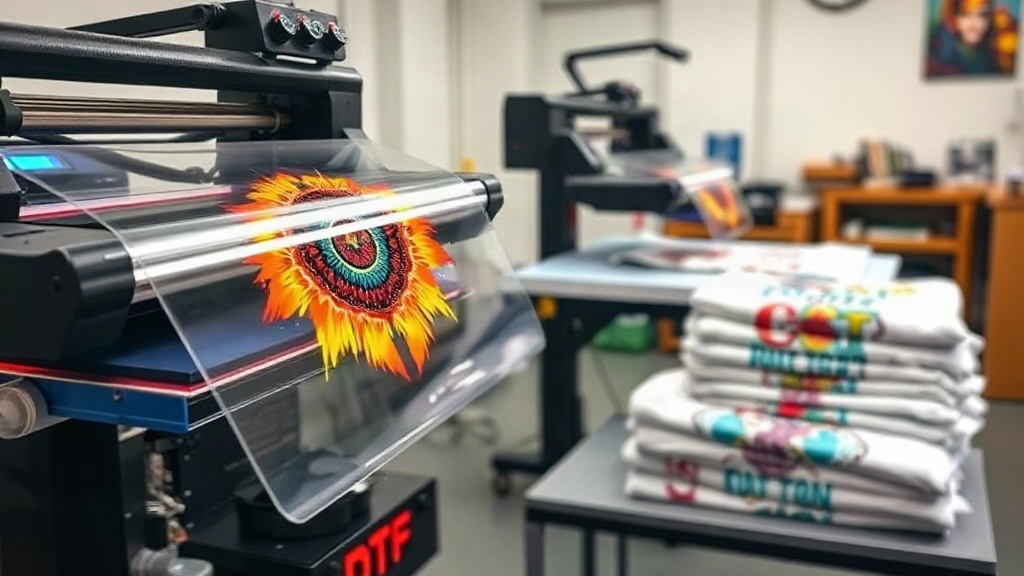
If you've been exploring custom apparel printing, you've likely encountered DTF printing. But what exactly is it, and why has it become a go-to method for creators and businesses alike? In this guide, we'll dive deep into DTF printing, covering everything from the basics to advanced tips, so you can decide if it's right for your next project.
What is DTF Printing?
DTF stands for Direct-to-Film. It's a printing technique where your design is printed onto a special film, coated with adhesive powder, and then heat-pressed onto fabric. Unlike DTG (Direct-to-Garment) or screen printing, DTF doesn't require pre-treatment of the fabric and works on a wide range of materials, including cotton, polyester, and blends.
The process involves a few key steps:
- Design Preparation: Your artwork is prepared digitally, ensuring it's mirrored and sized correctly.
- Printing: A DTF printer prints the design onto a special film using pigment-based inks.
- Powdering: While the ink is still wet, a hot-melt adhesive powder is applied to the film.
- Curing: The film is heated to melt the powder, creating a transferable layer.
- Transfer: The film is placed on the fabric and heat-pressed, transferring the design.
This method has gained popularity because it eliminates the need for weeding (like vinyl) and allows for full-color, detailed designs without color limitations.
Why Choose DTF Printing?
There are several reasons why DTF printing stands out:
- Versatility: Works on almost any fabric, including dark and light colors.
- Durability: Prints are stretchable and withstand repeated washing.
- No Pre-treatment: Saves time and equipment costs.
- Full-Color: No color limits; gradients and photographs print beautifully.
- Low Minimums: Ideal for small businesses and personalized items.
Whether you're printing a single custom t-shirt or a batch of team jerseys, DTF offers flexibility that traditional methods can't match.
DTF vs. Other Printing Methods
Let's compare DTF to other common techniques:
DTF vs. DTG
DTG prints directly onto the garment, requiring pre-treatment for dark shirts. It works best on 100% cotton. DTF, on the other hand, adheres to any fabric and doesn't need pre-treatment, making it more versatile.
DTF vs. Screen Printing
Screen printing is cost-effective for large orders but requires separate screens per color, making it impractical for complex designs or small runs. DTF excels with detailed, multi-color designs and short runs.
DTF vs. Vinyl
Vinyl requires weeding and layering, which is time-consuming and limited in detail. DTF transfers are ready to press, with no weeding, and can reproduce intricate designs.
Getting Started with DTF Printing
Ready to try DTF? Here's what you need:
- DTF Printer: A dedicated printer using DTF inks.
- DTF Film: Special transfer film (cold or hot peel).
- Adhesive Powder: Hot-melt powder for bonding.
- Heat Press: For curing and transferring.
- Design Software: To prepare your artwork.
Start with a small setup if you're testing the waters. Many suppliers offer starter kits.
Tips for Perfect DTF Transfers
To get professional results, follow these tips:
- Mirror Your Design: Always print mirrored.
- Control Humidity: Moisture can affect powder adhesion.
- Even Powder Application: Shake off excess powder; too much can cause a rough feel.
- Proper Curing: Follow the powder's curing temperature and time.
- Pressure and Temperature: Use medium pressure and recommended temp for your heat press.
- Test Wash: Always test a sample before full production.
Common Applications of DTF Printing
DTF is used for:
- Custom t-shirts, hoodies, and uniforms.
- Sportswear and activewear.
- Promotional items and corporate gifts.
- Fashion apparel with intricate designs.
Its ability to print on diverse fabrics makes it a favorite among startups and established brands.
Frequently Asked Questions
How long do DTF prints last?
With proper application and care, DTF prints can last 50+ washes. Follow washing instructions: turn inside out, cold water, no bleach.
Can I use DTF on 100% polyester?
Yes, DTF works great on polyester. It's one of the few methods that adhere well to polyester without dye migration issues.
Do I need a special printer for DTF?
Yes, you need a printer that uses DTF inks and can handle film. Some convert Epson printers, but dedicated DTF printers are recommended.
Is DTF printing cost-effective for small orders?
Absolutely. DTF has low setup costs and no minimums, making it ideal for one-off items or small batches.
What fabrics can I use with DTF?
Cotton, polyester, blends, nylon, and even leather. It's incredibly versatile.